

Scam alert: Ads or websites claiming Medsafe approval are fake. Medsafe does not endorse products. Go to medsafe.govt.nz for official information.
Flixonase®
Also called fluticasone nasal spray
Key points about Flixonase
- Flixonase® is used to treat and prevent hay fever.
- It contains a steroid called fluticasone.
- Find out how to use it to get the most benefit and the possible side effects.

Flixonase® nasal spray is used to treat and prevent hay fever. It contains a steroid, fluticasone, that works to reduce swelling (inflammation) and mucus in the nose. In this way, it relieves itching, sneezing and a blocked or runny nose.
People with hay fever only need to use it for a few months of the year, during the hay fever season, but others may need to use it long-term.
In Aotearoa New Zealand, it’s available to buy over the counter from pharmacies. It can also be written on a prescription by a prescriber.
Read more about steroid nasal sprays.
- The usual dose in adults is 2 sprays into each nostril once a day.
- Depending on your response, your doctor may increase your dose to 2 sprays 2 times a day.
- When your symptoms are less, you can reduce the dose to 1 spray in each nostril once a day.
- Always take your Flixonase exactly as your doctor has told you. The pharmacy label on your medicine will tell you how much Flixonase to use, how often to use it and any special instructions.
- Are you pregnant, planning a pregnancy or breastfeeding?
- Have you recently had nasal ulcers, or an injury to (or surgery on) your nose?
- Do you have an infection in your nose or sinus?
- Do you have frequent nose bleeds?
- Do you have pulmonary tuberculosis (TB)?
- Are you taking any other medicines?
If so, it’s important that you tell your healthcare provider or pharmacist before you start Flixonase.
Sometimes a medicine isn’t suitable for a person with certain conditions, or it can only be used with extra care.
To get the most benefit, use the correct technique when using a nasal spray. Watch a video and learn more about how to use a steroid nasal spray.
- The first time you use the pump spray each day, you may have to 'prime' it. Do this by squirting it a few times into the air until a fine mist comes out.
- Timing: Use Flixonase at the same times each day.
- When to start: If you’re using Flixonase for hay fever, and you know what time of year your symptoms usually start, you can begin using Flixonase 2 weeks before this time. Starting your nasal spray before the pollen count gets high will help prevent symptoms from developing.
- Missed dose: If you forget your dose, take it as soon as you remember. But, if it's nearly time for your next dose, just take the next dose at the usual time. Don't take double the dose.
- If you have trouble remembering when to take your Flixonase see tips to help you remember to take your medicines regularly. You might find a medication reminder app helpful.
Here are some things to know when you're using Flixonase nasal spray. Other things may be important as well, so ask your healthcare provider what you should know about.
- The effects of Flixonase are not immediate: It may take up to 4 days before you feel the full effect of the medicine.
- Keep using regularly: Flixonase needs to be used regularly for it to work.
-
How long to use Flixonase:
o Don’t use for more than 6 months continuously without advice from your healthcare provider.
o If you don’t get relief from your hay fever symptoms after using Flixonase continuously for 7 days, then tell your healthcare provider.
- Expiry: Once you have opened and used your Flixonase it’s okay to use it for 3 months. After this time, you’ll need to get a new one.
- Other medicines: Flixonase interacts with some medicines, herbal supplements and rongoā Māori, so check with your healthcare provider before starting Flixonase and before starting any new products.
- Pregnancy or breastfeeding: Talk to your healthcare provider if you're pregnant, planning a pregnancy or want to breastfeed.
Like all medicines, Flixonase nasal spray can cause side effects, although not everyone gets them. Often side effects improve as your body gets used to the new medicine.
| Side effects | What should I do? |
|---|---|
|
|
|
|
|
|
Read more about medicines and side effects and reporting a reaction that you think might be a side effect.
The following links have more information on fluticasone nasal spray. Please note that some of these resources are from overseas and the support and services information will be different to those used in New Zealand.
Flixonase(external link) Consumer Medicine Information NPS Medicinewise, Aust
Fluticasone (nasal spray)(external link) New Zealand Formulary Patient Information
Brochures
Medicines and side effects Healthify He Puna Waiora, NZ, 2024
5 questions to ask about your medications (external link)Health Quality and Safety Commission, NZ, 2019 English(external link), te reo Māori(external link)
Apps
References
- Fluticasone (intranasal)(external link) New Zealand Formulary
- Fluticasone propionate(external link) New Zealand Formulary for Children
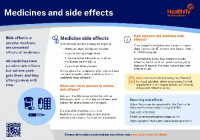
Medicines and side effects
Healthify He Puna Waiora, NZ, 2024

Health Quality and Safety Commission, NZ, 2019 English, te reo Māori
Free helplines


Credits: Healthify editorial team. Healthify is brought to you by Health Navigator Charitable Trust.
Reviewed by: Angela Lambie, Pharmacist, Auckland